Emergency Funds in India: How Much Runway Do You Really Need in 2026?
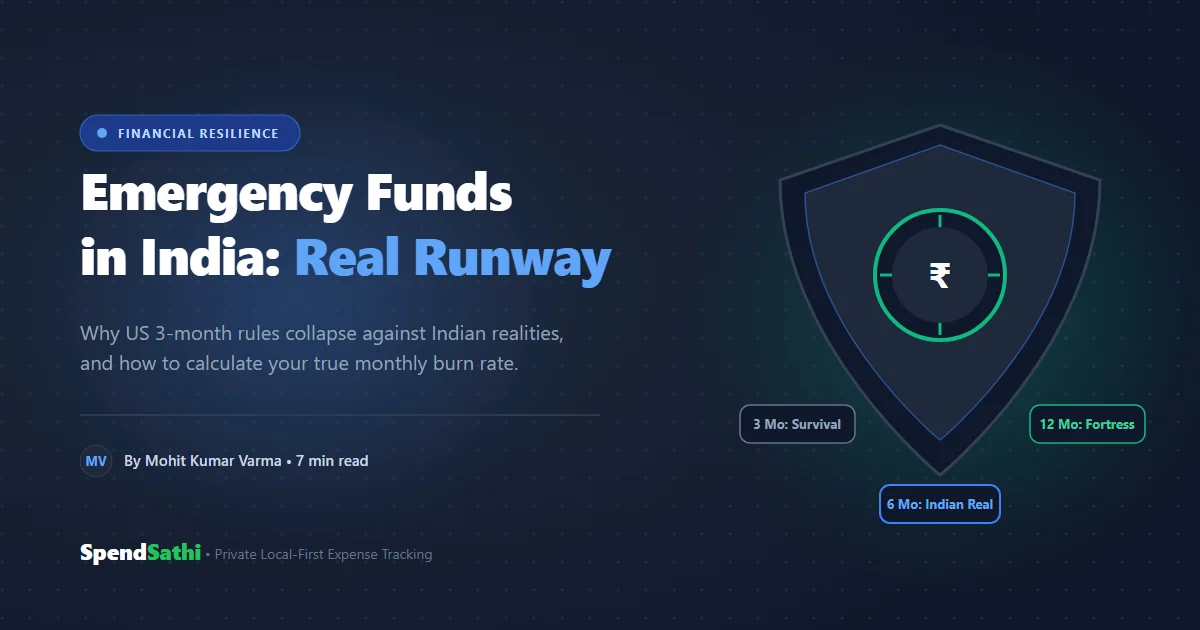
If you ask any personal finance influencer on social media how much cash you should keep in an emergency fund, you will receive the exact same copy-pasted advice: “Save three to six months of living expenses.”
It sounds logical, tidy, and achievable. But this boilerplate guidance was developed in the United States decades ago, under an entirely different socio-economic safety net.
In India, where we operate without comprehensive state unemployment benefits, where hiring cycles in high-paying sectors have stretched into multi-quarter freezes, and where a single unexpected family medical emergency can wipe out years of disciplined investing, the generic “3-month” rule is dangerously fragile.
If an emergency strikes, your investments shouldn’t be forced into an emergency fire-sale at the bottom of a market cycle. You need a resilient financial runway tailored to the unique economic realities of life in modern India.
Why the Generic ‘3-Month’ Formula Fails in India
To build an emergency fund that actually protects you, you have to look honestly at the systemic risks Indian professionals face today:
1. Extended White-Collar Hiring Cycles
In the tech and corporate booms of 2021, changing jobs took three weeks. In 2026, hiring across product, engineering, analytics, and mid-management involves 4 to 6 interview rounds, rigorous assignments, and deliberate background screenings. The average duration between an involuntary corporate exit and the first salary credit of a new role is now four to seven months. A 3-month emergency fund runs dry halfway through your interview loop.
2. The Sandwich Generation Responsibilities
In Western economies, personal finance is largely individualistic. In India, personal finance is familial. If you are in your late 20s or 30s, you often sit in the “sandwich generation”: you may be supporting aging parents whose retirement savings or pensions are vulnerable to medical inflation, while simultaneously funding your own young family’s household expenses. When an emergency occurs, it rarely happens to only one individual.
3. Healthcare Room-Rent Caps and Deductibles
Many salaried employees believe their corporate health insurance makes an emergency cash reserve redundant. But anyone who has managed a real hospital discharge knows about copays, excluded consumables, sub-limits on room rents, and reimbursement delays. You frequently need ₹1,50,000 to ₹3,00,000 in immediate, liquid cash at 2 AM before the TPA desk approves cashless claims or during post-discharge care.
The 3-Tier Emergency Runway Blueprint
Instead of picking an arbitrary number of months, structure your emergency fund into three distinct tiers:
┌────────────────────────────────────────────────────────┐
│             YOUR COMPLETE EMERGENCY FORTRESS           │
└────────────────────────────────────────────────────────┘
  ▲
  │   ┌──────────────────────────────────────────────┐
  ├───┤ TIER 3: Black Swan & Health Buffer (₹2-3L)   │
  │   │ Liquid Fund / Sweep-In FD                    │
  │   └──────────────────────────────────────────────┘
  │   ┌──────────────────────────────────────────────┐
  ├───┤ TIER 2: Realistic Runway (6-9 Months)        │
  │   │ High-Yield Savings / Arbitrage Fund          │
  │   └──────────────────────────────────────────────┘
  │   ┌──────────────────────────────────────────────┐
  └───┤ TIER 1: Core Survival Baseline (3 Months)    │
      │ Separate Bank Account (Instantly Accessible) │
      └──────────────────────────────────────────────┘
Tier 1: Core Survival Baseline (3 Months)
This represents the absolute bare minimum needed to keep a roof over your head and food on the table if all income vanishes tomorrow.
- Includes: House rent or home loan EMI, basic groceries, electricity and Wi-Fi, child tuition fees, basic vehicle fuel, and minimum term/health insurance premiums.
- Excludes: Dining out, weekend getaways, OTT subscriptions, shopping, and discretionary electronics.
Tier 2: The Realistic Indian Runway (3 to 6 Additional Months)
This tier accounts for the reality of long job searches and family obligations. If your income stops, you don’t immediately pull your kids out of their sports classes or default on vehicle insurance. Tier 2 gives you the dignity of maintaining a reasonable standard of living while you interview, upskill, or pivot your career without feeling panicked desperation.
Tier 3: The Medical & Home Contingency Buffer (Fixed ₹2,00,000 – ₹3,00,000)
A dedicated liquid block designed specifically for sudden non-monthly shocks: urgent medical admissions, emergency pet surgeries, sudden home water-proofing repairs, or emergency flights for family crises.
How to Calculate Your True Monthly Burn Rate
The biggest mistake people make when calculating their emergency fund target is guessing their monthly burn rate.
Most people think: “My salary is ₹1,00,000. I probably spend around ₹45,000. So a 6-month fund is ₹45,000 × 6 = ₹2,70,000.”
Then they actually track their expenses and discover their true monthly burn rate is ₹68,000. Their estimated “6-month” emergency fund would actually run out in less than four months.
You cannot calculate a reliable runway from memory or wishful thinking. You need your actual, unedited transactional reality over the last 90 days.
Why Local-First Tracking is the Foundation of Your Runway
This is where SpendSathi becomes an indispensable financial instrument.
SpendSathi sits on your phone and automatically aggregates every bank and UPI alert as they arrive:
- Accurate Baseline Expense Calculation: SpendSathi maps your historical spending automatically into clear categories—housing, utilities, groceries, health, and discretionary—so you know your exact baseline survival cost down to the rupee.
- Subscription & Auto-Debit Detection: It flags recurring mandates and subscriptions that would drain your emergency fund during a crisis, allowing you to cancel them with a single tap.
- Absolute Privacy: Calculating an emergency fund shouldn’t require surrendering your bank credentials or sharing your net worth with cloud databases. SpendSathi keeps all data encrypted strictly in your local device storage.
Where Should You Park Your Emergency Fund?
The objective of an emergency fund is capital preservation and immediate liquidity, not high investment returns. Never park your emergency reserves in equity mutual funds, crypto, or locked tax-saving instruments (like ELSS or PPF).
| Vehicle | Liquidity | Expected Return | Ideal Allocation |
|---|---|---|---|
| Separate Savings Account | Immediate (ATM / UPI) | 3.0% – 4.0% | 1 Month of Expenses |
| Sweep-in / Auto-FD | Instant breaking via app | 6.5% – 7.2% | 2 to 3 Months |
| Liquid / Arbitrage Mutual Funds | T+1 business day redemption | 6.5% – 7.5% | Remaining 3 to 6 Months |
Keep your emergency fund in a completely different bank from your everyday UPI spending account. If your emergency fund is visible inside your Google Pay balance, human psychology guarantees that minor non-emergencies will slowly eat it away.
Start With Month One Today
Building a 6-to-9 month emergency fortress can feel daunting when you look at the total rupee amount. Don’t let the size of the final goal paralyze you:
- Start with a 1-Month Milestone: Focus exclusively on securing 30 days of core survival baseline.
- Use SpendSathi to uncover your silent cash leaks: Re-direct the ₹3,000–₹5,000 you are currently losing to forgotten subscriptions and impulsive micro-spends straight into your emergency vault.
- Automate the build: Treat your emergency fund contribution as an untouchable monthly bill that gets paid on Day 1.
A well-funded emergency reserve doesn’t just protect your net worth—it gives you freedom from fear, the confidence to negotiate career moves on your own terms, and peaceful sleep every single night.