Digital Gold vs Sovereign Gold Bonds vs Equity SIP: The Modern Indian Dilemma
In Indian households, gold is not just an asset—it represents cultural heritage, security, and an intergenerational hedge against currency depreciation.
However, modern retail investors face a dilemma: with equity mutual funds delivering 12% to 15% long-term returns and digital gold platforms promoting instant micro-purchases, how should a salaried individual structure their precious metals allocation in 2026?
Here is an objective breakdown of physical gold, digital gold, Sovereign Gold Bonds (SGB), and Equity SIPs.
1. Comparing Gold Investment Avenues
Digital Gold
- Pros: Buy for as low as ₹10 via UPI; 24K pure gold stored in insured vaults.
- Cons: High 3% GST on purchase, 2% to 3% spread between buy and sell prices, and holding period caps (must convert to physical or sell within 5 to 10 years).
- Verdict: Convenient for gifting, but suboptimal for long-term compounding due to upfront friction costs.
Sovereign Gold Bonds (SGBs) & Gold ETFs
- Pros: Issued by RBI on behalf of the Government of India; pays an additional 2.5% annual interest on nominal value; zero making charges.
- Tax Benefit: Capital gains are 100% tax-free if held until maturity (8 years).
- Verdict: The gold standard for financial gold allocation in India. Secondary market purchases through demat accounts remain an exceptional option.
2. Gold vs Equity Mutual Funds: Historical Reality
Over a 20-year horizon, equity indices like the Nifty 50 have historically outpaced gold by 3% to 5% annualized. A 14% equity return compounds ₹10,000/month into ₹1.3 Crores over 20 years, whereas a 9% gold return yields ₹67 Lakhs.
However, gold performs its magic when equities crash. During market drawdowns (like 2008 and 2020), gold acts as an uncorrelated anchor, preserving capital and stabilizing portfolio volatility.
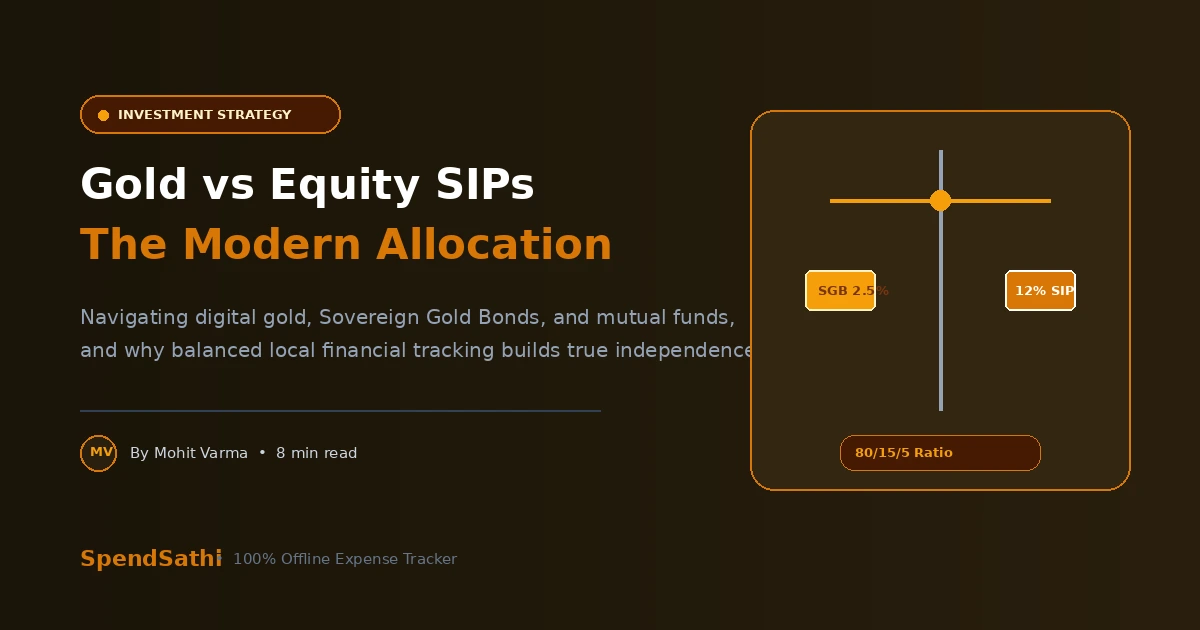
The Recommended Golden Ratio: The 80-15-5 Rule
For most Indian professionals under 45:
- 75% to 80%: Diversified Equity Mutual Funds (Index + Flexi-cap funds) for compounding wealth.
- 10% to 15%: Sovereign Gold Bonds or Gold ETFs for portfolio hedging and crisis liquidity.
- 5% to 10%: Liquid reserves and fixed income.
Track Your Asset Allocation Locally with SpendSathi
Whether you are investing ₹5,000 into gold or ₹20,000 into an index fund, maintaining steady monthly investments requires disciplined cash flow control.
SpendSathi ensures you never miss an investment installment:
- Automated Wealth Categorization: Tag your SIP and investment debits with rich gold badges.
- Local Data Protection: Your investment values and bank notifications remain private on your device.
- Clear Cash Flow Clarity: Know your operational surplus before making impulsive discretionary purchases.
Download SpendSathi on Google Play to track your wealth-building journey today.